Next-gen technology stack
Built for future growth
Rapid development cycles
Enterprise-grade security
Honestly, our onboarding looked fine in Figma, but once we had different roles and real user data, people just dropped off.
We faced challenges with permissions and data governance. Now our dev team is constantly patching compliance issues.
Every new feature felt bolted on. The UX turned messy and slowed the team down.

Custom web solutions, from complex platforms to interactive dashboards and scalable Healthcare products, designed to boost functionality and drive growth.
Smooth first-time experiences that increase activation and reduce early churn.
Clear menus and layouts designed for role-based user journeys.
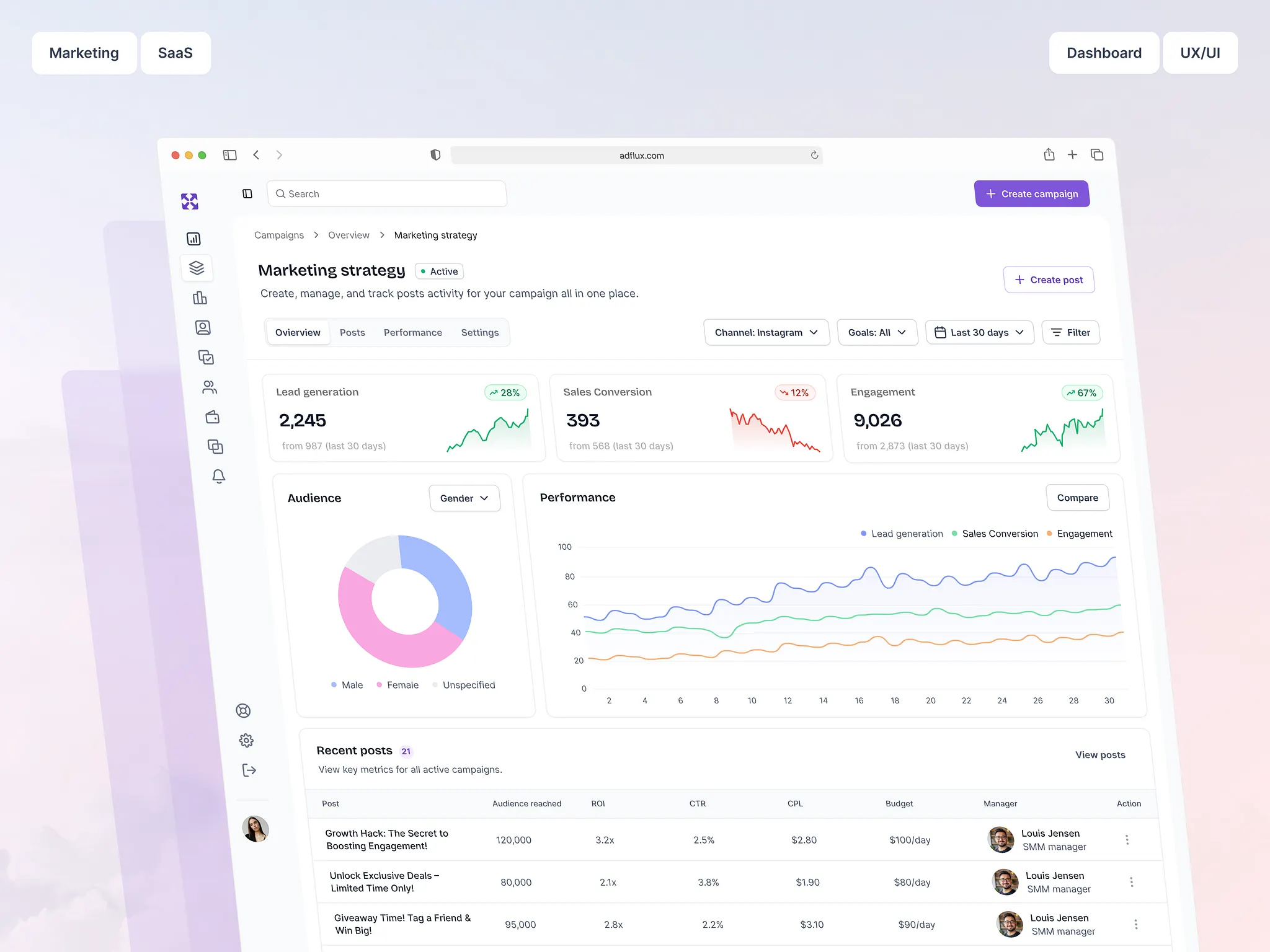
Modular views for tracking KPIs, actions, and service metrics in real time.
Cards, tables, and charts that turn complex data into actionable insights.
Interfaces for permissions, approvals, and secure multi-user workflows.
Plan selection, usage metering, invoices, and upgrade flows designed for clarity.
Contextual, customizable messaging that keeps users informed without clutter.
Analytics screens with filters and exports for deep operational insight.
Fast, intuitive controls to find data across complex Healthcare structures.
Well-structured inputs with validation and autosave to improve data quality.
Secure user roles, groups, and access controls for scalable management.
User-facing controls for preferences, integrations, and system behaviour.
Assignment and tracking interfaces supporting team workflows.
Commenting, shared views, and activity logs to support teamwork.
Embedded chat, help centre access, and contact widgets for user help.
Smarter screens supporting chatbots and predictive automation, ideal for B2B Healthcare design in sales, health tech, and analytics-heavy platforms.
Tailoring interfaces and workflows to user habits, critical for Healthcare application design in marketing automation, HR systems, and customer support tools.
Subtle animated feedback reducing errors, perfect for Healthcare dashboard design, and complex productivity or planning tools.
Natural language and voice-first controls simplifying tasks, valuable for B2B Healthcare website design in field services, health, and customer support apps.
Game-inspired progress, rewards, and challenges, boosting engagement in B2B Healthcare website designs for learning, onboarding, and internal team management.
Prioritizing privacy, accessibility, and environmental impact, essential for UX design for Healthcare serving diverse markets and compliance-heavy industries.
Craig Tortolani
CPO at Dekryption Labs
Ash Bryant
Founder of HormnThe design team is truly world-class, excelling in both user interface design and creating solutions optimized for conversion.
KlickEx Team
George Fry
Founder at NeapThe quality of the designs is fantastic. Catalyr works at speed and is extremely punctual with timelines. They deliver top-notch outcomes with exceptional designs.
Andre Guerra
Co-Owner at RADCAT Design
Kevin Alvarez
Founder & General Partner, PredictiveCatalyr's ability to translate concepts and rough design mock-ups into high-fidelity assets, designs, and visuals was very impressive. The goal was to maintain simple elegance in the design aesthetic, and they did it very well.
Since 2019, we’ve gained HIPAA and GDPR certifications and industry recognition, delivering hundreds of products in Healthcare, SaaS, and EdTech — where compliance and UX go hand in hand.
Our work looks sharp today and stays usable tomorrow — designed around long-term value, not short-term gimmicks. Scalable systems, brand consistency, and smart UX that grows with your product.
Every component is built with devs in mind: design tokens, accessibility, reusability, and real-world constraints. We collaborate with your team, reuse existing elements, and stay involved until everything’s live.
Collaborate with UX strategists in North America, while our senior design and development teams in Europe deliver fast, consistent results. We integrate into your tools and workflow, working as part of your team — from a single embedded designer to a full product squad.
Rapid MVP Delivery
Taking ideas from concept to a market-ready MVP in just 6-10 weeks.
50+ Products Launched
Successfully delivered robust digital solutions across 6 global markets.
100% Code Ownership
You retain full intellectual property and source code rights from day one.
Enterprise-Grade SaaS
Building scalable, secure architectures designed for high-growth stages.
User-Centric Design
Crafting intuitive UX/UI that engages users and drives product adoption.
Upgrade legacy interfaces with scalable, business-driven UX and Ul from a top-notch design agency.
Healthcare design is the practice of creating the user interface (UI) and user experience (UX) for software-as-a-service applications delivered via the cloud. Unlike single-purpose apps, Healthcare products often serve diverse user roles, handle complex data, and support ongoing subscriptions, all of which demand thoughtful, scalable design.
At its core, Healthcare design focuses on structuring workflows, screens, and interactions to make the product intuitive, efficient, and consistent across devices. This includes planning Healthcare homepage design for marketing and onboarding, dashboards for tracking key data, role-based permissions, billing interfaces, and responsive layouts. A good Healthcare design company doesn’t just make screens look polished; it ensures real user needs drive layout choices, navigation logic, and visual hierarchy.
For example, UX design Healthcare work might involve mapping onboarding flows that reduce churn or designing dashboards that prioritize the most critical metrics for each role. Designers consider data density, user permissions, notifications, and real-time updates, all while maintaining a cohesive brand experience.
Ultimately, Healthcare design is about creating a product that not only functions well but is easy to learn, reduces errors, and supports long-term customer retention. Working with an experienced Healthcare design agency like Catalyr ensures your platform can grow and evolve without sacrificing clarity or usability, keeping your users engaged and your business competitive.
Healthcare product design goes beyond making software look appealing; it’s about structuring the entire user experience to support real business goals, workflows, and user needs. Unlike single-use apps, Healthcare products often include complex role management, multi-step onboarding, data-rich dashboards, billing, and subscription management.
Healthcare product design involves understanding these challenges upfront, then creating interfaces and systems that solve them in a clear, consistent way. For example, an effective Healthcare homepage design isn’t just marketing; it’s carefully crafted to communicate value, convert visitors, and guide them into onboarding smoothly. Similarly, dashboard design must balance data density with readability, ensuring users can act on insights without getting lost in complexity.
An experienced Healthcare design company will focus on modular design systems and component libraries that enable faster feature rollouts without breaking consistency. They’ll also embed accessibility, responsive layouts, and localization support from the start, avoiding costly reworks down the line.
Investing in professional UX design Healthcare practices helps reduce churn by improving usability, reducing error rates, and supporting user goals effectively. This isn’t about making things look trendy; it’s about solving business problems with design that can scale as your product grows. When you work with a trusted design agency like Catalyr, you’re not buying screens; you’re investing in a product experience that supports adoption, retention, and sustainable growth.
Designing a Healthcare application starts with understanding your users, their roles, and the workflows they need to complete. Unlike simple apps, Healthcare platforms often support multiple user types—admins, managers, customers—each with specific permissions and goals. That’s why thoughtful Healthcare architecture design is critical from the start.
A typical design process begins with research and mapping real user journeys. This step identifies friction points and uncovers opportunities to simplify onboarding, task flows, and data presentation. UX design Healthcare work involves defining clear navigation, intuitive layouts, and responsive interfaces that adapt across devices. For example, a high-end
Prototyping and testing come next. Here, designers create interactive mockups to validate assumptions before investing in development. Collaboration with development teams is essential to ensure designs are feasible, accessible, and performant.
An experienced Healthcare website design agency also considers marketing needs, ensuring the Healthcare homepage design is aligned with the overall product experience.
Ultimately, designing a Healthcare application is about balancing user needs, business goals, and technical realities. Working with skilled Healthcare designers helps teams build modular, scalable interfaces that evolve over time without sacrificing clarity or usability.
Designing a Healthcare product requires a strategic, user-centred approach that balances business goals, user workflows, and technical constraints. The process typically starts with deep discovery work, understanding your target users, their pain points, and the tasks they need to accomplish. This informs the overall Healthcare architecture design, ensuring role-based access, permissions, and workflows are planned from the ground up.
A good design process includes wireframing, prototyping, and usability testing to validate ideas before development. For example, mapping onboarding flows reduces early churn, while providing a clear dashboard design ensures users can see and act on key data without confusion. Responsive layouts are also critical, supporting access across devices without sacrificing usability.
UX design Healthcare isn’t just about interface visuals; it’s about creating logical, consistent experiences that scale as new features are added. Design systems and reusable components help maintain consistency across teams and sprints, reducing maintenance costs and development time.
Partnering with a skilled Healthcare website design agency ensures your product benefits from proven design practices and industry experience. From a compelling homepage that drives signups to in-app workflows that retain customers, professional design turns complex Healthcare ideas into usable, valuable products that can grow with your business.
Designing Healthcare architecture is about planning the foundation that supports your product’s usability, scalability, and maintainability. It starts with understanding user roles and permissions to define how data flows securely between different parts of the system. Role-based access control (RBAC) is a core consideration in Healthcare architecture design, ensuring users see only what they need while maintaining compliance and security.
Another key factor is designing modular, service-oriented components that can evolve independently. This approach enables teams to roll out new features without breaking existing functionality—the best Healthcare websites design practice. Frontend design systems and reusable components also play a role, maintaining UI consistency while supporting rapid development cycles.
From a user-facing perspective, planning Healthcare homepage design and onboarding flows early ensures marketing and product experiences are aligned. Designers work closely with engineers to translate user journeys into technical architecture, covering everything from API design to data storage strategies.
Effective UX design Healthcare work here means mapping real workflows and reducing unnecessary complexity. Instead of hard-coding assumptions, thoughtful architecture allows configuration and customization without constant redevelopment.
Ultimately, designing Healthcare architecture is a collaboration between product, design, and engineering teams, laying the groundwork for a scalable, user-friendly platform that can adapt to changing needs over time.
Designing Healthcare software means creating user experiences that are intuitive, scalable, and adaptable to evolving business needs. Unlike traditional software, Healthcare platforms often serve multiple user roles, handle real-time data, and support subscription models. It starts with research—understanding users’ goals, pain points, and workflows to ensure every screen and interaction supports real tasks.
A strong design process includes planning modular UI components and consistent patterns that reduce development time and maintenance costs. Designers work on homepage design for marketing and conversion, onboarding flows to reduce early churn, and dashboard design that presents key metrics clearly.
Collaboration between Healthcare designers and development teams is critical. Good design isn’t just attractive—it’s developer-ready, with clear specs, design tokens, and accessibility considerations baked in. Prototyping and user testing help validate assumptions before full-scale build, saving both time and Healthcare costs down the line.
Partnering with a Healthcare website design agency ensures your product benefits from industry best practices, avoiding common pitfalls like bloated features or confusing navigation. The result is a Healthcare platform that delivers a consistent, efficient user experience while remaining flexible enough to support new features and business models over time.
The Healthcare cost for design and development can vary widely depending on product complexity, team experience, timeline, and scope. There’s no universal price tag for building a high-quality Healthcare platform because each project has unique requirements.
For example, simple MVPs with limited features and one or two user roles can be designed and developed at a lower Healthcare cost, while full-featured platforms with complex dashboards, role-based access, and integrations require more investment. Enterprise Healthcare products often involve additional layers like permissions management, security audits, and regulatory compliance, all of which impact cost.
Key factors influencing Healthcare cost include research and discovery time, number of unique screens or workflows, responsive design needs, accessibility standards, localization requirements, and the need for a consistent, scalable design system. Investing upfront in solid design reduces long-term Healthcare costs by preventing costly redesigns and ensuring developer-ready deliverables.
Working with a professional Healthcare design agency or Healthcare website design agency ensures you’re not only paying for attractive UI but for well-planned, developer-friendly design that reduces handoff friction and accelerates build timelines. While prices can range from tens of thousands to over a hundred thousand dollars for complex projects, the goal is always to balance quality, maintainability, and return on investment.
The best Healthcare websites design balances marketing goals, product education, and trust-building while guiding visitors smoothly toward conversion. Unlike typical brochure sites, Healthcare websites must clearly communicate what the product does, who it’s for, and why it’s worth trying—all without overwhelming or confusing potential users.
A key element in the best Healthcare website design is clarity: strong messaging paired with an intuitive layout ensures visitors immediately understand the product’s value proposition. Visual hierarchy and consistent branding reinforce credibility, while clear calls-to-action support trials, demos, or signups. Responsive design is essential, ensuring the experience is equally effective on mobile and desktop.
Effective Healthcare websites also integrate product UI previews or animations to help prospects visualize the experience. Testimonials, case studies, and security assurances further build trust, especially important for B2B buyers. Good design doesn’t just look appealing; it reduces friction by anticipating objections and answering questions upfront.
Finally, modern design systems enable consistent styling across marketing pages, onboarding flows, and the app itself, ensuring users have a seamless experience from site visit to in-app use. Investing in thoughtful website design isn’t about vanity: it’s about conversion, retention, and setting the stage for a long-term customer relationship.
Partnering with experienced designers ensures your Healthcare site isn’t just attractive but functional, strategic, and ready to grow with your product.
Prioritizing features in Healthcare product design is one of the most critical steps for creating a successful, maintainable platform. It starts with aligning on your core value proposition: What real problem your software solves for users. Too many products fail because they try to be everything to everyone, creating bloated, confusing interfaces that slow adoption.
A solid prioritization approach typically combines user research, business goals, and technical feasibility. User interviews, surveys, and analytics help uncover which workflows are most essential. Teams often use frameworks like MoSCoW (Must-have, Should-have, Could-have, Won’t-have) or RICE (Reach, Impact, Confidence, Effort) to score and rank ideas objectively.
Collaboration between design, product, and engineering teams is also crucial. Designers contribute insight into usability and workflows, while engineers evaluate technical dependencies and risks. This shared understanding helps avoid surprises during development.
Prototyping and user testing further validate priorities before committing to a full build. Instead of assuming a feature is valuable, you can observe how real users respond and refine the experience early.
Finally, strong Healthcare teams treat prioritization as an ongoing process. User needs, competitive landscapes, and business goals evolve over time. Regular reviews and backlog grooming ensure the roadmap stays focused on delivering maximum value without accumulating unnecessary complexity that increases costs and slows growth.